
OTS meaning in text is most commonly “On The Spot.” If you’ve ever seen “OTS” pop up in a text, Snapchat streak, TikTok comment, or Instagram DM and paused for a second, you’re not alone. Text slang moves fast…
This guide breaks it down clearly so you can read it (and use it) without second-guessing.
🧠 What Does OTS Mean in Text?
OTS almost always stands for On The Spot in casual texting and social media. It signals something happening instantly, spontaneously, or without preparation. Think of it as a quicker way to say “right away,” “immediately,” or “in the moment.”
People drop it when they want to show they’re ready to act fast—answering a question, jumping into a challenge, making a decision, or reacting on the fly.
Example:
A: Can you answer this question now?
B: Sure, I’ll do it OTS!
Another Example:
A: They need the reply ASAP.
B: Sending it OTS 🔥
It’s short, punchy, and fits the speed of modern chats.
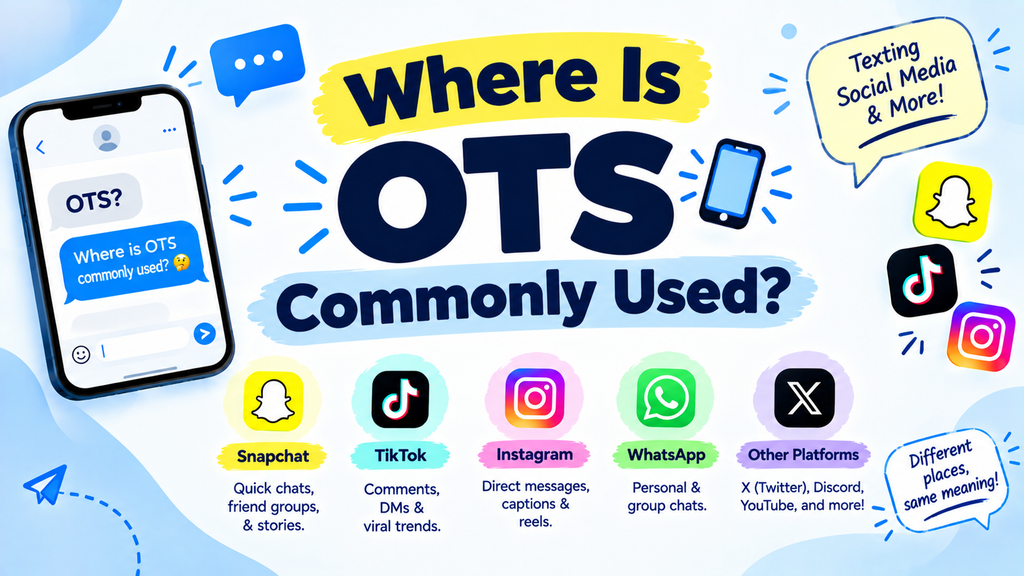
📱 Where Is OTS Commonly Used?
📲 Common Platforms
You’ll mainly see OTS on:
- Snapchat (quick snaps and friend challenges)
- TikTok (reacting to trends or spontaneous dares)
- Instagram (DMs and comment threads)
- Regular texting and WhatsApp
- Discord or group chats where things move fast
🎯 Typical Situations
- Responding to last-minute plans or challenges
- Confirming you’ll handle something immediately
- Reacting to a live event or quiz
- Showing you’re available right then
Tone of OTS
Casual, energetic, and a little spontaneous. It keeps the vibe light and quick. It’s not formal—more like the digital equivalent of saying “on it” while already moving.
💬 Examples of OTS in Conversation
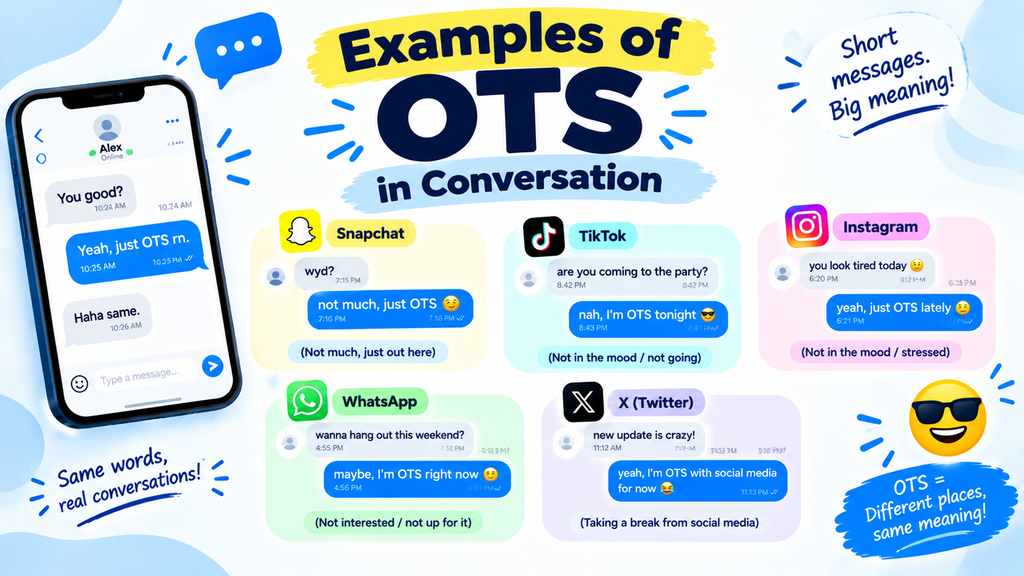
Here are real-feeling chat examples:
Example 1
A: Can you submit that challenge now?
B: Yes, doing it OTS 😎
Example 2
A: They want us to vote immediately.
B: Got it! OTS 💪
Example 3
A: The quiz starts in 5 minutes.
B: I’ll answer OTS 📝
Example 4
A: That idea is great! Can you start today?
B: Starting OTS.
Example 5
A: Need a quick decision on the plan.
B: I’m in OTS.
Example 6
A: Can you hop on the call right now?
B: Joining OTS.
Example 7
A: Drop the link when you’re ready.
B: Link’s up OTS.
These show how naturally it slots into fast-moving conversations.
🕓 When to Use and When Not to Use OTS
✅ When to Use OTS
Use it in casual chats with friends, group texts, or social media when you want to emphasize speed or readiness.
Examples
- Confirming you’ll handle something immediately
- Jumping into a spontaneous activity
- Keeping the energy high in a fun conversation
❌ When Not to Use OTS
Skip it in professional emails, work messages, school assignments, or any formal setting. It can look unprofessional or unclear.
Better Alternatives
- “Right away”
- “Immediately”
- “I’ll handle it now”
- “On it”
Example
Instead of “I’ll send the report OTS,” say “I’ll send the report right away.”
🔍 Other Meanings of OTS in Text
While “On The Spot” leads in everyday chat, OTS can mean other things depending on the context:
- Off The Shelf – Ready-made or available immediately (common in shopping or product talk).
- Over The Shoulder – Looking from behind someone’s shoulder (gaming, photography, or catching someone).
- One True Ship – Favorite romantic pairing in fandom communities.
- Opportunity To Sell – Sales or business contexts.
Always read the full message. A food order saying “sauce OTS” might lean toward “on the side,” while “I’m OTS at the party” usually means “on the scene.”
📊 OTS Usage by Context
| Context | Most Likely Meaning | Example |
|---|---|---|
| Casual texting | On The Spot | “Doing it OTS” |
| Arriving somewhere | On The Scene | “OTS at the café” |
| Changing topic | Off The Subject | “OTS, did you see that show?” |
| Food / extras | On The Side | “Fries OTS” |
| Gaming / camera | Over The Shoulder | “Check the OTS view” |
| Business / retail | Off The Shelf | “Got it OTS” |
🔄 Similar Slang Words and Alternatives
- ASAP (as soon as possible)
- RN (right now)
- On it
- Straight away
- Immediately
Example Comparisons
“I’ll do it OTS” feels more spontaneous than “I’ll do it ASAP.”
“OTS” is shorter and more casual than spelling out “on the spot.”
🚨 Common Mistakes People Make About OTS
Mistake #1: Assuming One Meaning Everywhere
OTS shifts with context. What works in a Snapchat reply may confuse someone in a work chat.
Mistake #2: Using It in Professional Communication
Bosses and teachers usually prefer clear full words.
Mistake #3: Confusing It with Similar Slang
Don’t mix it up with OT (off topic) or OTW (on the way). Close, but not the same.
🌐 Why Text Slang Like OTS Is Popular
People love speed. Typing three letters instead of a full phrase saves time and matches the fast rhythm of messaging apps. Slang also creates a sense of belonging—if you know it, you’re in the conversation. In 2026, with constant notifications and short attention spans, shortcuts like OTS simply make chatting smoother.
📈 Is OTS Still Popular in 2026?
Yes. It remains common in casual digital conversations, especially among younger users on Snapchat, TikTok, and Instagram. While new slang appears every year, practical abbreviations that save time tend to stick around. You’ll still see it regularly in group chats and spontaneous plans.
Frequently Asked Question
What does OTS stand for in texting?
Most often “On The Spot,” meaning immediately or right away.
Is OTS a slang term?
Yes, it’s informal internet and texting slang.
Is OTS professional?
No. Keep it for casual chats only.
What does OTS mean on Snapchat?
Usually “On The Spot” for quick replies or challenges, sometimes “On The Scene” when someone arrives.
What does OTS mean on TikTok?
Often used when reacting to trends or challenges right away—“doing it OTS.”
Can OTS have multiple meanings?
Yes. Context decides between On The Spot, On The Side, On The Scene, and a few others.
Should I use OTS in emails?
Better not. Use clear language instead.
What’s the easiest way to understand OTS?
Look at the full sentence. If it involves speed or immediate action, it’s almost always “On The Spot.”
📝 Final Thoughts
OTS is a simple, useful piece of text slang that mainly means On The Spot—something happening right now without delay. Once you know the main meaning and watch the context, it becomes easy to read and use. Stick to casual conversations, match the energy of the chat, and you’ll sound natural.
