
You open a chat and someone writes, “PM me for details.” Or your manager says, “Check with the PM.” Or a friend texts, “See you at 6 PM.”
Same two letters, three different meanings. So what does PM mean in text?
In most online chats, PM means “private message.” It is a request to continue the conversation privately instead of in public. In other situations, PM can mean “post meridiem” (afternoon and evening hours) or “project manager.” This guide covers each meaning, where you will see it, and how to tell them apart.
What Does PM Mean in Text?
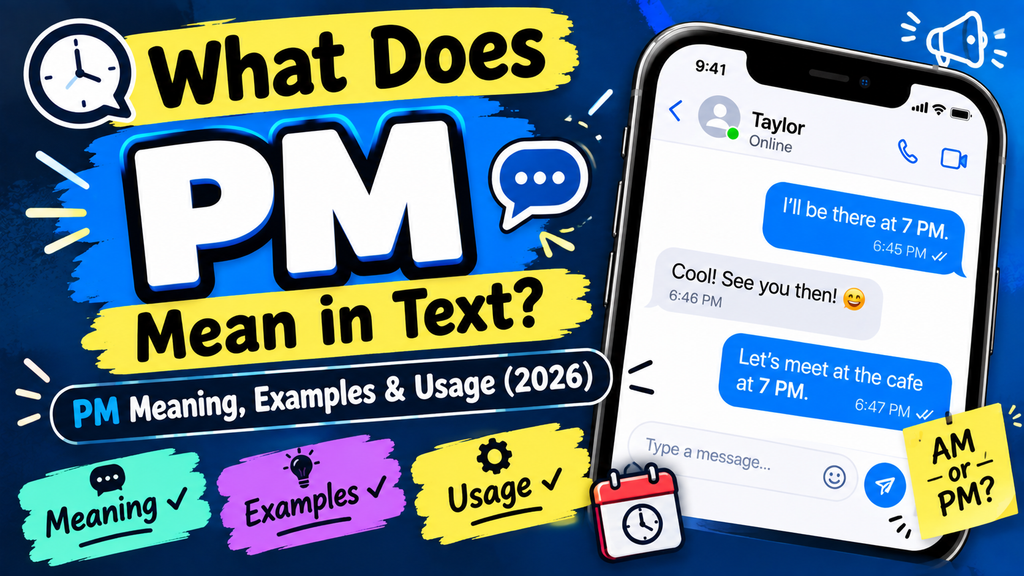
PM in text most often stands for “private message.” It describes a message sent to one person, or a small group, instead of being posted where everyone can see it.
You will usually see it in two forms:
- As a noun: “I sent you a PM.”
- As a verb: “PM me your email.”
The word has been around since the early internet. Forums, chat rooms and gaming communities used it long before social media apps existed. It is still common today.
Simple Meaning: PM Explained Like You’re Talking to a Friend
Imagine you are chatting in a busy group and someone asks where you bought your jacket. You don’t want to post the shop link and your price for the whole room. So you say, “I’ll PM you.”
That is all it means: let’s take this out of the group chat.
People use it to:
- Share personal details like an email, address or phone number
- Discuss prices or deals
- Ask a sensitive question
- Keep a long conversation from clogging a public thread
PM Can Also Mean “Post Meridiem” (Time)
When “PM” comes right after a time, it has nothing to do with messaging. It is short for the Latin phrase post meridiem, which means “after midday.”
- AM = ante meridiem (before midday)
- PM = post meridiem (after midday)
Quick reference:
- 12:00 PM = noon
- 12:00 AM = midnight
- 7:30 PM = evening
If a number comes before it, it’s about time. If it is attached to “me,” it’s about messaging.
Where Is “PM” Used? (Platforms & Situations)
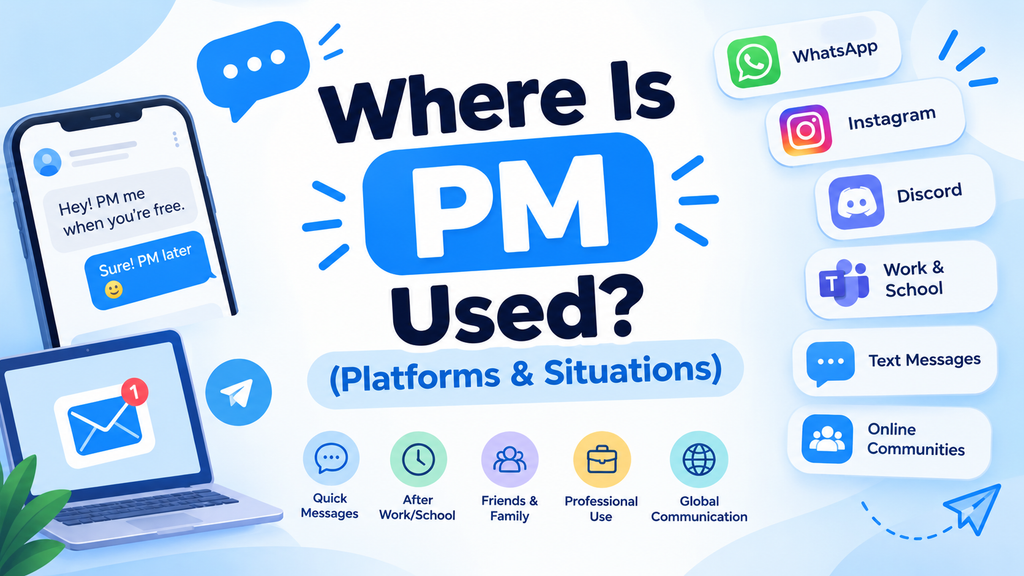
The meaning stays the same, but the platform changes how people say it.
Social Media
On Facebook, Snapchat and similar apps, “PM” usually points to a private chat. Instagram and X (formerly Twitter) users tend to say “DM” instead, but you will still see “PM” in captions and comments.
- “PM me if you want the link.”
- “Sent you a PM!”
Messaging Apps
In WhatsApp, Telegram or Messenger, chats are usually one-on-one or in groups. “PM” here usually means “message me separately,” often from inside a group chat.
- “I’ll PM you the details so we don’t spam the group.”
Forums & Online Communities
This is where PM began. Many forums, including hobby boards, gaming communities and classified-style sites, have a built-in private message inbox. Rules often say things like “Do not post prices in public. PM the seller.”
Workplace & Professional Chats
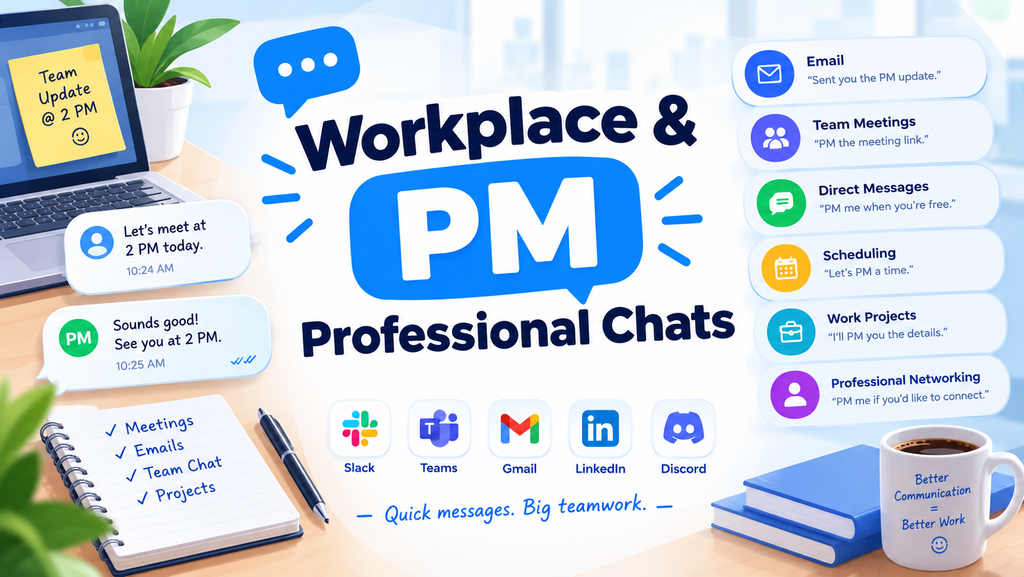
Here it gets trickier. At work, PM often means project manager or product manager. Tools like Slack and Teams usually use “DM” for private messages, so “PM” is more likely to mean a person or a job title.
- “Loop in the PM before we ship.”
- “Ask the PM about the timeline.”
Why Do People Use “PM” Instead of Just Talking Normally?
There are a few practical reasons:
- Privacy. Some details should not be public.
- Speed. Two letters are faster than “please send me a private message.”
- Keeping threads clean. Public conversations stay focused when side talk moves elsewhere.
- Habit. Forum culture made “PM me” a standard phrase, and it stuck.
- Safety. Sellers, helpers and moderators often move chats private to avoid sharing sensitive info in public.
Real-Life Examples of “PM” in Text (With Explanations)
Example 1: Asking for Privacy
- “Can you PM me your address? I don’t want to post it here.”
- Meaning: Please message me privately with your address.
Example 2: Selling Something Online
- “Selling my bike, $120. PM for photos.”
- Meaning: Message the seller directly if you want more pictures.
Example 3: Forum Reply
- “Good question, but it’s easier to explain in a PM. Check your inbox.”
- Meaning: I’ll answer in a private message instead of in the thread.
Example 4: Time-Based (Not Messaging)
- “Dinner is at 8 PM, don’t be late.”
- Meaning: Eight o’clock in the evening. No messaging involved.
Example 5: Workplace Context
- “The PM approved the new design.”
- Meaning: The project manager (or product manager) signed off on it.
PM vs Similar Terms (Comparison Table)
| Term | Full Form | Typical Use | Where You’ll See It |
|---|---|---|---|
| PM | Private message | Send a message privately | Forums, Facebook, general chat |
| DM | Direct message | Send a message privately | Instagram, X, Discord, Slack |
| PM | Post meridiem | Time after 12:00 noon | Schedules, calendars, clocks |
| PM | Project / product manager | Job title or role | Offices, tech teams, emails |
| IM | Instant message | Real-time chat | Older chat apps, workplace tools |
| Inbox me | (phrase) | Ask for a private message | Informal social media |
The short version: PM and DM mean nearly the same thing when talking about messages. The difference is mostly habit and platform.
When Should You Use “PM” in Text?
Use it when you want to:
- Move a conversation out of a public space
- Ask someone to share details privately
- Keep a group chat from getting cluttered
- Follow a forum or marketplace rule
Skip it when:
- You are writing a formal email or business document. Write “private message” or “direct message” in full.
- The other person may not know the slang. Spell it out for clarity.
- A time is involved and you want to avoid confusion. Write “6:00 PM” with the number attached.
Common Misunderstandings About “PM”
- Confusing PM (message) with PM (time). Context solves this one. A number before it means time. “Me” after it means message.
- Assuming PM Means the Same as DM. They overlap, but they are not identical. “PM” is the older, forum-style term. “DM” is the term most social apps use now. Most people treat them as interchangeable.
- Thinking PM Is Only Used by “Tech People”. Not true. Teenagers, sellers, gamers, community moderators and office workers all use it. The meaning just shifts with the group.
- Believing PM Means Something Negative or Suspicious. “PM me” is not shady by default. Most of the time it is a normal, polite way to move to a private chat. That said, be careful with strangers who push you to share personal or financial details in private. That is a common scam pattern, and it has nothing to do with the term itself.
Pro Tips for Using “PM” the Right Way
- Check the platform. On Instagram, say “DM.” On a forum, say “PM.”
- Be specific. “PM me your email” is clearer than “PM me.”
- Mind the audience. Use the full phrase with people who may not know the slang.
- Write times with numbers. “5 PM” and “PM me” almost never get mixed up when written out.
- Stay safe. Don’t share passwords, bank details or ID numbers in any private chat.
- Capitalize consistently. “PM” and “pm” are both fine in casual texting, but capitals look cleaner in professional settings.
Final Thoughts
So, what does PM mean in text? Most of the time, it means private message, a quick way to move a conversation out of public view. It can also mean post meridiem when attached to a time, or project manager in a work setting.
Read the context, check for a number before it, and watch the platform you are on. Once you know those three signals, you will rarely misread it.
Frequently Asked Questions
1. What does PM mean in a text message?
In most casual chats, PM means “private message,” a request to continue the conversation privately. If a time comes before it, like “9 PM,” it means after midday.
2. Is PM the same as DM?
Nearly. Both mean a private message, but “PM” is more common on forums and older platforms, while “DM” is more common on Instagram, X and Discord.
3. Can PM mean something other than messaging?
Yes. It can mean post meridiem (afternoon and evening), project manager, product manager, or prime minister, depending on context.
4. Is it rude to ask someone to PM you?
No. It is a normal and polite request, especially when the topic is personal or does not belong in a public thread.
